Winning the Fight Against Apple’s Biggest Insect Threats
Protecting apple yield and fruit quality starts with a strong, proactive insect management plan. The most successful programs are built around timely scouting, pest biology, and well‑timed applications—not reactionary rescue sprays.
Below, we take a closer look at five of the most damaging insect pests facing U.S. apple producers, why they matter, and how growers can optimize control through the season.
1. San Jose Scale: Small Insect, Big Consequences
San Jose scale (SJS) remains one of the most economically damaging pests in apples because infestations often go unnoticed until harvest, when red “halo” spots appear on fruit. Heavy infestations can weaken trees, reduce yields, and even cause limb or tree death.
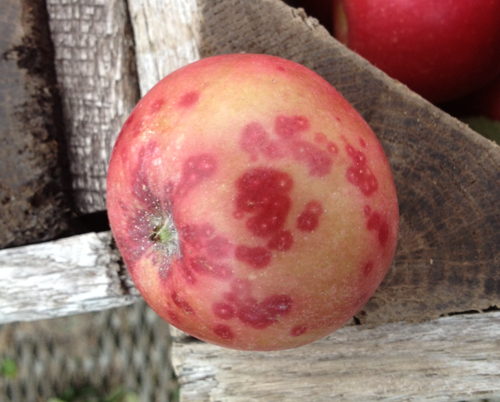 Photo credit: Amy Irish-Brown
Why timing matters:
San Jose scale has approximately two generations per year, but vulnerable life stages are present across much of the season. Overwintering immatures persist on bark, while crawlers emerge later and settle beneath their waxy covering.
Management tips:
- Be proactive, not reactive. Dormant and delayed‑dormant sprays are critical for targeting overwintering populations.
- Scout bark and limbs early. Pay close attention to smoother bark on older trees and trunk areas on young trees.
- Target black cap to adult stages at petal fall, when control is most effective for IGRs, and the impact on fruit quality is greatest.
University extension guidance from Washington State University (WSU) and Penn State consistently emphasizes the importance of early intervention and follow‑up monitoring for San Jose scale.
Solutions:
- Esteem® 35 WP Insect Growth Regulator – Best applied during delayed-dormancy through pink to target overwintering SJS.
- Senstar® Insecticide – Apply after petal fall to target SJS crawlers.
2. Woolly Apple Aphid & Other Aphids: Soft‑Bodied but Stubborn
Aphids—including woolly apple aphid (WAA), rosy apple aphid, and green apple aphid—can quickly become a season‑long management challenge if populations are allowed to establish. Woolly apple aphid is especially problematic due to its ability to infest both tree roots and canopy.
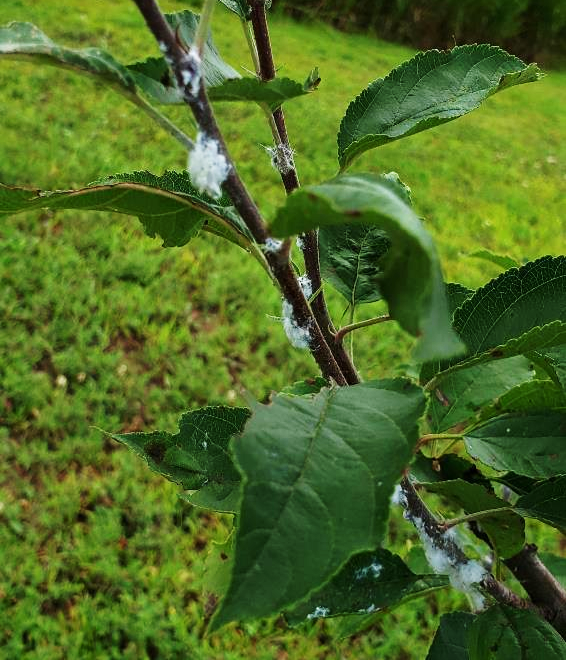 Photo credit: Eric Ott
Impact on orchards:
- Honeydew accumulation leading to sooty mold on fruit.
- Reduced photosynthesis and shoot growth.
- Galls on roots and shoots that weaken young trees.
Management tips:
- Begin scouting in late May to early June, when shoots are rapidly expanding.
- Look for curled leaves, cottony white colonies, ants, and honeydew.
- Evaluate beneficial insect activity before spraying—aphid populations may be naturally suppressed.
- Once woolly apple aphid colonies are established, control becomes far more difficult, reinforcing the value of early management.
Extension programs in Washington, Michigan State University (MSU), and Cornell University all stress balancing aphid management with preservation of beneficial insects.
Solutions:
- Esteem® 35 WP Insect Growth Regulator – For WAA, apply from delayed dormant to ½ inch green.
- Senstar® Insecticide – For WAA, apply starting after petal fall to target early-season nymphs and break the pest lifecycle. A follow-up application 14–21 days later is recommended if pressure was high the previous season.
3. Codling Moth & Oriental Fruit Moth: Precision Is Everything
Codling moth remains the number one direct damage pest in apples, with larvae boring directly into developing fruit. Oriental fruit moth can compound pressure, particularly where overlapping generations occur.
 Photo credit: Allison Walston
Why growers struggle:
Missed spray timing early in the season often results in increased pressure later—precisely when fruit is most vulnerable.
Management tips:
- Use pheromone traps and degree‑day models to guide decisions.
- Establish biofix with help from local extension programs.
- Target eggs around 100 degree‑days and target early larvae shortly after hatch.
- Rotate modes of action and incorporate biological tools to manage resistance.
- Ensure excellent coverage, especially in the tops of trees.
Degree‑day modeling resources from WSU, MSU, and Penn State are invaluable tools for dialing in codling moth timing.
Solutions by order of degree-days:
- Esteem® 35 WP Insect Growth Regulator – For codling moth only, apply Esteem primarily at 100–150 degree-days (base 50°F) after biofix (adult flight), which often aligns with petal fall. A second application 14–21 days later is necessary for sustained control, focusing on targeting eggs before they hatch.
- DiPel® DF Biological Insecticide Dry Flowable – Apply DiPel DF when codling moth eggs are hatching or when young larvae are present, typically 10 to 21 days after full petal fall.
- Belay® Insecticide – For codling moth, apply Belay roughly 250 degree-days (base 50°F) after the first sustained moth flight (biofix), which typically aligns with late May to early June. Belay should not be applied at bloom during bee activity.
- Danitol® 2.4 EC Spray – For codling moth, apply Danitol when eggs begin to hatch, which is typically around 250 degree-days (base 50°F) after the first sustained flight of moths (biofix). This generally aligns with the first cover spray. Danitol should not be applied at bloom during bee activity.
4. Leafrollers, Including Obliquebanded Leafroller: Hidden Feeders, Direct Losses
Leafrollers—especially obliquebanded leafroller (OBLR)—can quietly reduce fruit quality and canopy health. Larvae feed on leaves, shoots, and fruit while protected in rolled foliage. OBLR overwinters as immature larvae and typically produces 1–2 generations per year, extending pressure into summer.
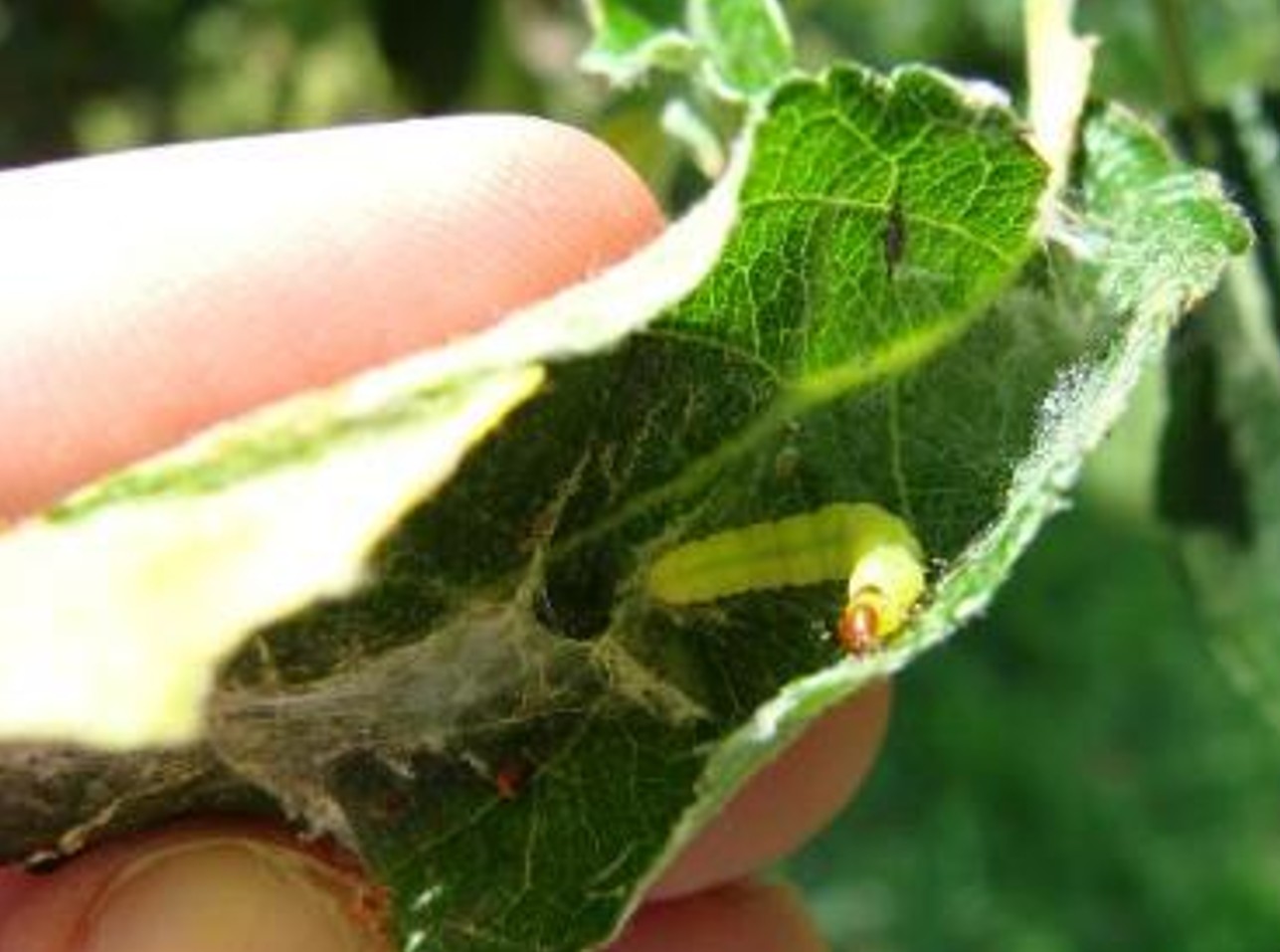 Photo credit: Allison Walston
Management tips:
- Start at tight cluster–petal fall. Target overwintering larvae early.
- Monitor flights. Use traps and degree-day models to time applications.
- Target small larvae. Control is best before leaf rolling begins.
- Use sequential sprays if needed. Repeat at ~7-day intervals when hatch is extended.
Solutions:
- DiPel® DF Biological Insecticide Dry Flowable – Effective control of young larvae and for resistance management.
5. Plum Curculio: Early‑Season Damage with Lasting Impact
Plum curculio adults overwinter outside the orchard and migrate in quickly after bloom. Egg‑laying scars (“cat‑facing”) not only reduce fruit quality but also open pathways for secondary infection.
Management tips:
- Early‑season sprays are critical, starting at petal fall.
- Focus on warm evenings when adults are most active.
- Follow a structured timeline through first and second cover sprays.
- Maintain clean orchard floors and manage nearby habitats where possible.
Research from both Michigan State University and Cornell University emphasizes that missing early plum curculio control cannot be remedied later in the season.
Solutions:
- Belay® Insecticide – Apply Belay starting at petal fall, with subsequent applications (cover sprays) made 7-14 days later if activity continues.
Pulling It All Together: Strong Plans Beat Strong Pests
The most successful apple insect programs are those that:
- Start with orchard history and risk assessment.
- Rely on scouting, trapping, and environmental monitoring.
- Use well‑timed applications based on pest biology.
- Remain flexible enough to adjust as the season unfolds.
By staying proactive—especially against early‑season and overwintering pests—growers can protect fruit quality, reduce late‑season pressure, and maximize returns. Valent remains committed to supporting growers and retail partners with proven solutions, local expertise, and tools that help make every application count.
For more information, connect with your local Valent representative or visit valent.com/apples.
Always read and follow label instructions.
Danitol is a restricted use pesticide.