
Break the Insecticide Resistance Cycle
Adding DiPel® DF Biological Insecticide to your worm (lepidopterous larvae) control program helps break resistance cycles while delivering effective control and strong return on investment.
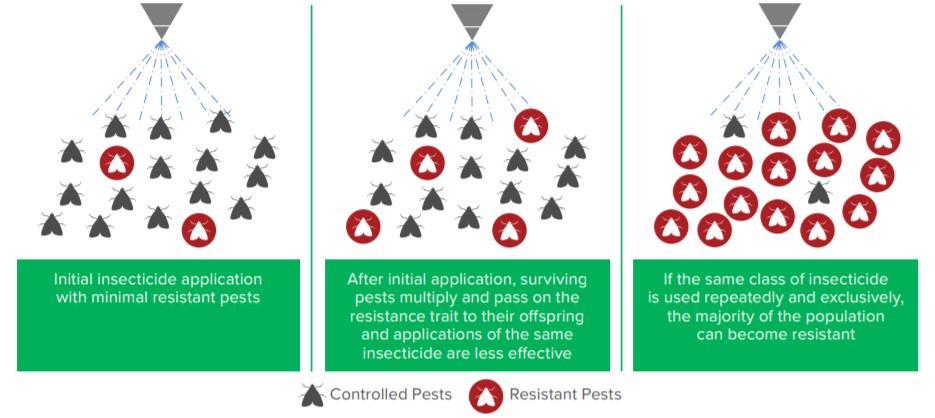
How Insect Resistance Develops
Insects, such as worms, can be highly susceptible to developing resistance to insecticides when one class of insecticide is used exclusively and repeatedly. Surviving insects are left to form future resistant generations. Over the course of multiple generations and sprays, the insect populations move from predominately susceptible to predominately resistant. By adding DiPel to your worm control program the cycle is broken so that not only are the worms controlled, but the effectiveness of conventional insecticides is maintained.
DiPel—Excellent Choice for Worm Control Programs
- Economical control of worm pests
- No harvest residue or MRL concerns because DiPel is exempt from tolerance
- Great rotational partner to reduce the potential of worms developing resistance to insecticides with other modes of action
Visit the DiPel DF product Webpage for more information on how DiPel can help you break the insecticide resistance cycle.
Always read and follow label instructions.