Stop NOW: A Proven One‑Two Punch Program for Navel Orangeworm Control in Almonds and Pistachios
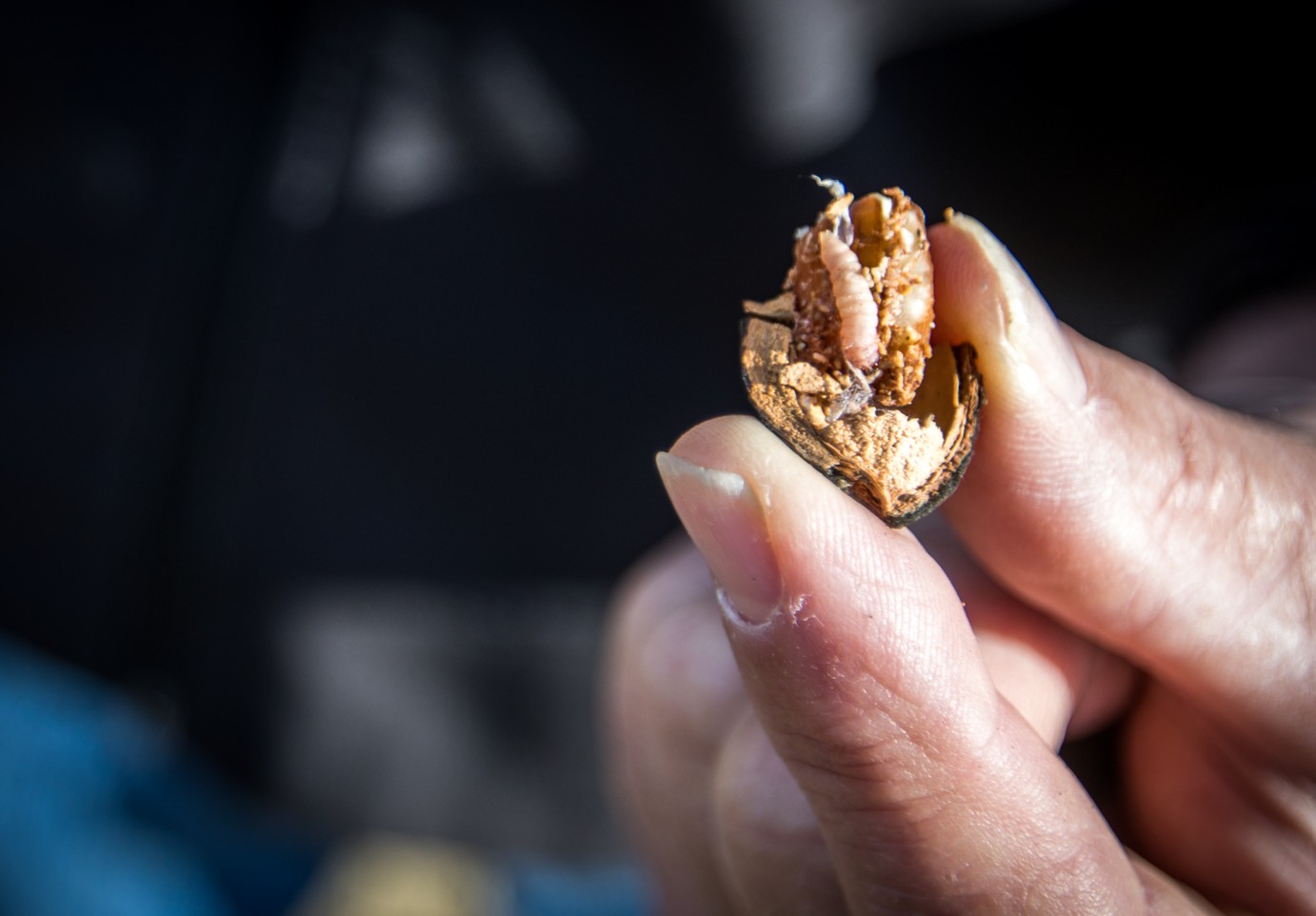
When it comes to almonds and pistachios, navel orangeworm (NOW) (Amyelois transitella) remains the most economically devastating insect pest facing growers. Losses stem from larval feeding directly on the nutmeat, which reduces quality, increases reject levels, and elevates aflatoxin risk.
University of California IPM guidance is clear—effective NOW management depends on precise timing and layered control focused on egg hatch, early larval activity, and adult suppression at hull split. The Valent navel orangeworm program was built with this biology in mind, delivering a proven one‑two punch that stops NOW before damage starts and finishes the job when pressure peaks.
Know the Biology, Control the Damage
NOW larvae cause the most damage immediately after egg hatch, when they rapidly burrow into the developing nut. Once larvae enter the nut, control options are limited, making early intervention critical. UC IPM emphasizes protecting nuts before and during hull split, when orchards are most vulnerable to infestation. The Valent program responds directly to this challenge with a biological-first foundation followed by contact control.

First Punch: DiPel® DF Before Hull Split
The first punch in the Valent NOW program begins prior to hull split with DiPel® DF Biological Insecticide Dry Flowable.
DiPel DF contains Bacillus thuringiensis (Bt) and delivers Cry-protein active ingredients that are highly effective against Lepidopteran larvae such as NOW, while remaining compatible with beneficial insects and integrated pest management programs. However, DiPel DF is not like other Bts because it is specifically formulated to optimize NOW control with four specially-selected and concentrated Cry-protein active ingredients.
How DiPel DF Stops NOW Larvae
DiPel DF should be applied approximately 7 days before hull split, when egg hatch is imminent. As NOW eggs hatch near the hull split zone, larvae begin feeding almost immediately. By encountering DiPel DF:
• Larvae ingest the DiPel DF Cry-proteins as feeding begins
• Feeding activity stops quickly
• Larvae are unable to cause nutmeat damage
• Larvae perish before establishing inside the nut
This early, ingestion‑based control reduces larval pressure at hull split, setting the stage for a stronger overall program.
Second Punch: Danitol® at Hull Split
The second punch is at hull split, when the crop is most exposed, and the pressure is highest.
Danitol® 2.4 EC Spray delivers fast, reliable contact activity, providing:
• Additional control of newly hatching larvae
• Knockdown of flying NOW adults to reduce additional egg laying
• A complementary mode of action to DiPel DF
By targeting both larvae and adults, Danitol helps shut down population momentum during the season’s most critical timing window.
Proven Performance Backed by Data
Performance matters, especially under real‑world pressure. The data summarized in Figure 1 demonstrate that the Valent NOW program delivers results growers can trust.
Figure 1: DiPel DF and Danitol Perform on Par with Grower Standards
(Source: Multiple private cooperators, California)
As shown in Figure 1, applications of DiPel DF (2 lb/A) and Danitol (21.3 fl oz/A) achieved marketable nut levels statistically similar to leading grower‑standard insecticides. Both Valent products significantly outperformed the untreated control, delivering robust protection.
These results confirm that:
• Biological control with DiPel DF is highly effective when properly timed
• Danitol provides strong, reliable hull‑split protection
• The DiPel DF + Danitol program performs as well as conventional grower standards, without sacrificing efficacy
A Flexible Program Built for Real‑World Pressure
NOW pressure varies by orchard history, sanitation, and seasonal conditions. That’s why Valent emphasizes a programmatic approach rather than a single‑spray solution.
The Valent NOW program supports:
• Multiple DiPel DF applications prior to hull split as pressure increases
• Timely Danitol deployment at hull split
• Alignment with UC IPM monitoring tools, such as traps, degree‑day models, and orchard sanitation
• Resistance‑management principles through diverse modes of action
Final Takeaway: Don’t Give NOW an Opening
Navel orangeworm doesn’t wait—and neither should your control program. Protecting yield and quality requires early intervention, strong hull‑split control, and confidence in performance. With DiPel DF and Danitol, Valent delivers a proven one‑two punch that meets grower standards and helps keep NOW from ever getting the upper hand.
Contact your PCA or Valent representative to tailor your NOW program for almonds and pistachios this season.
Learn more about DiPel DF and Danitol.
Always read and follow label directions. Danitol is a restricted use pesticide.